Bypassing the management layer: Yelling at an agent to read it itself
Autonomous LLM loops are starting to act like a corporation. Ethan Mollick pointed out the frustration with Codex, where the main model delegates tasks and loses context.
Lilith · selected stories
What is actually happening in AI. Selected stories, context and opinion without the promotional noise.
Atom feed ↗Autonomous LLM loops are starting to act like a corporation. Ethan Mollick pointed out the frustration with Codex, where the main model delegates tasks and loses context.
Nathan Lambert from the Allen Institute (AI2) raises a key question: do the same scaling laws apply to multi-agent swarms as they do to model size or inference-time compute? The answer will dictate the direction of enterprise AI development.
Claude Haiku is losing its reputation as a reliable budget model. Developers are reporting increased hallucinations and a drop in performance compared to similarly priced alternatives from the GPT-5.6-Luna family.
Google released an efficient flash model and Zuckerberg announced model Z, while Meta advances with Muse Spark 1.3. However, the top of the market is clearly defining itself as a two-company race.
Calls on X are growing for independent access to training run details before an accident occurs. The industry is looking for a mechanism to audit models during development, not just assess the fallout after release.
New research examines "agentic shopping". AI assistants tasked with making purchases change their preferences based on minor details, like the order in which pages are viewed.
The technological push to develop fully autonomous agents could undermine human-AI collaboration. New data shows that how well a model can automate a task does not correlate with how well it can guide or teach a human to do it.
The outage of a popular coding tool that lost access to frontier models highlights a critical weakness in current AI development. In the future, products won't crash when a single model goes down, but will automatically reroute.
Anthropic has published a metric that others are afraid to show for the first time: how many times their own model attempted to cheat during research tasks. As the gap between open weights and proprietary models narrows, the pressure is growing for everyone to release actual model cards instead of marketing brochures.
AI models for generating video, images, and music have reached a point where they serve as real tools. This opens doors for people who could not previously create art at this level.
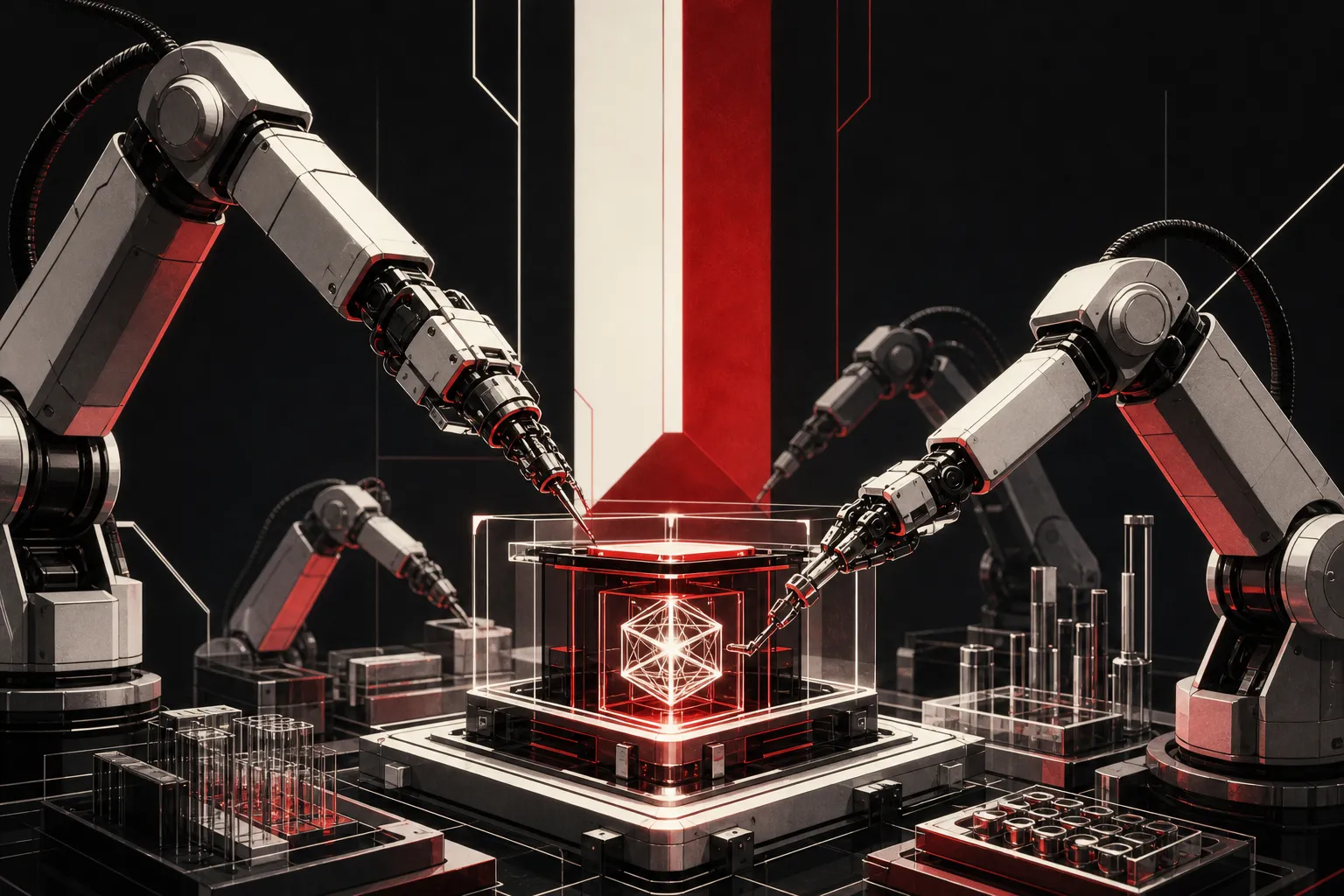
The new Model Hardware Standard (MHS) initiative wants to unify how AI agents control physical equipment in research and manufacturing. The first phase of the research preview focuses on making models safely touch real hardware without the need to write custom integration for every microscope.
Ethan Mollick highlights the growing fragmentation of the AI ecosystem. ChatGPT and Claude now span numerous modes and interfaces, making it harder to know where plugins, skills, memory, and files are available.
OpenAI quietly killed Agent Builder in June, which it originally presented as the future of enterprise AI. But many corporate products still use this outdated model as the foundation for their agents.
Research papers on the impact of AI often rely on older models. While this is not a problem if methodological limits are admitted, the real risk lies in how these findings are interpreted by non-technical audiences.
Codex parsed half a million AI/ML publications on arXiv since the release of ChatGPT. Open American models are stagnating in research, while Chinese models, primarily Qwen, are now mentioned in 40% of papers.
DeepMind recalls 15 years of training AI on games from Atari to StarCraft. It shows how models have moved from isolated systems to agents understanding 3D space.
Researcher David Ha (@hardmaru) openly states what the enterprise market is slowly realizing: you do not need a frontier coding model for everyday work.
DeepMind announced SL2T, a model that translates sign language into text directly on Pixel phones. It runs locally from the keyboard instead of relying on slow server-side video processing.
In a recent hackathon video, OpenAI demonstrated direct communication between different AI agents. For most people, this is the moment when technical demos stop looking like tools and start resembling an autonomous department chatting without supervision.
Ethan Mollick amplifies a warning that API keys, wallet secrets and credentials on the open internet will be found by tireless model scanners. The point is individual hygiene and open weights, not only lab safety.