
← Library · Guide
Golden Dataset — ground truth for an AI system, not a golden cage
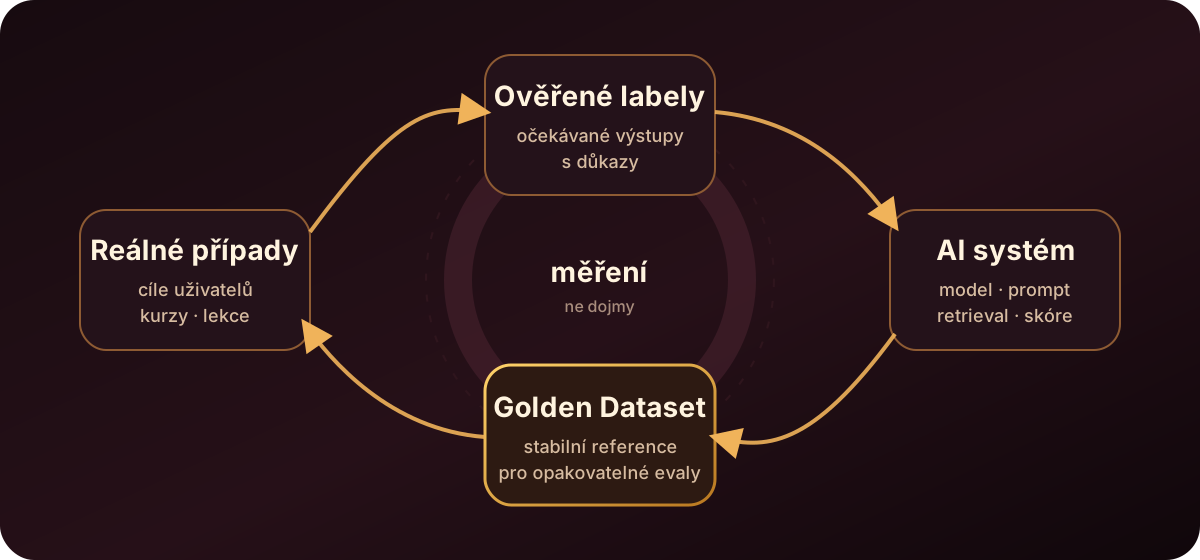
A Golden Dataset is a small, carefully reviewed set of real cases used to tell whether an AI system actually works. Using a course recommender as a worked example: it helps evaluate recommendations against real content, not marketing blurbs.
Rule of thumb: A Golden Dataset is not “a lot of data”. It is a smaller set of cases you trust more than the model. Without it, you are not measuring quality; you are judging whether the answer sounds smart.
What it is
A Golden Dataset is a curated, versioned, reviewable set of real inputs and expected outputs used as the source of truth for evaluating an AI system. It usually contains the input, the expected answer or label, evidence for that answer, metadata, review status and version information.
It is not meant to be huge. It is meant to be reliable. Think of it as a calibrated instrument, not a warehouse. The warehouse needs volume; the instrument needs precision and a known error surface.
Why course recommenders need it
Take a course recommender in an e-learning catalog as a worked example. Course recommendation cannot rely only on course titles and marketing descriptions. A user’s goal is specific: learn AI for marketing, use Excel in accounting, build a junior developer workflow. To recommend well, the system needs to know what the course actually teaches, for whom, at what difficulty, and with what prerequisites.
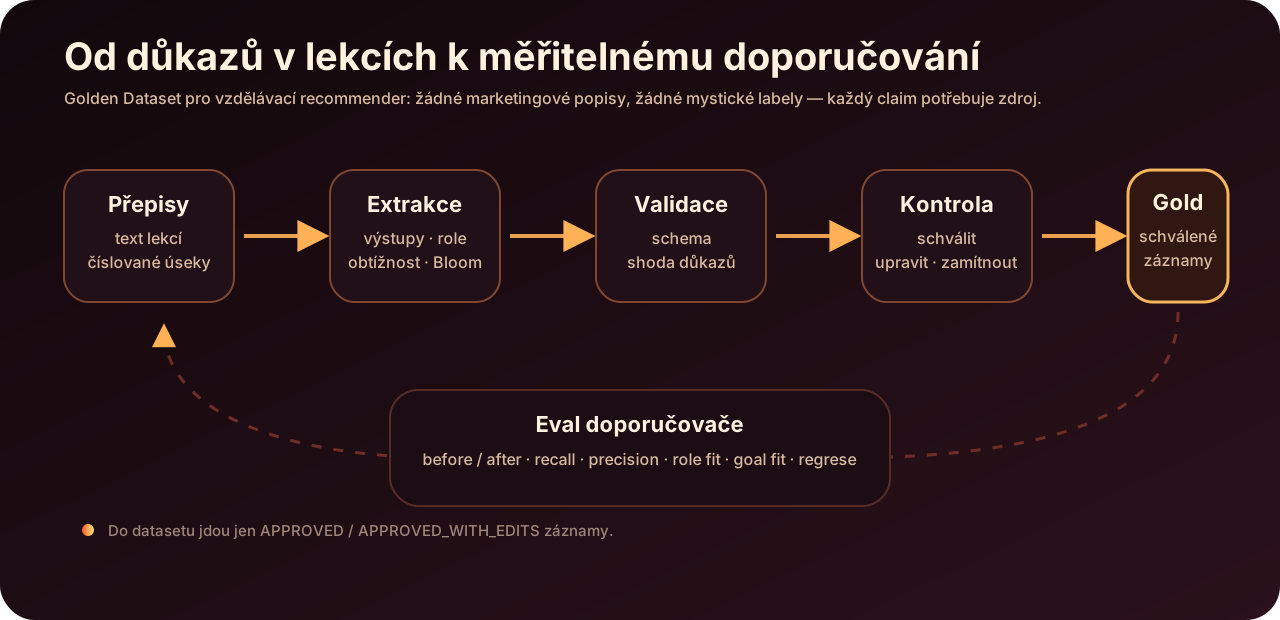
That information often lives inside lesson transcripts, not in the short public description. So a Golden Dataset for such a recommender is built from lesson evidence: extract pedagogical metadata, validate it, review uncertain cases, and only then use approved course profiles as reference data.
What to extract
A useful course profile includes learning outcomes, target roles, topic tags, prerequisites, difficulty, Bloom level, citations and confidence signals. The confidence must not be “the model feels sure”; it should come from operational checks: schema validity, evidence match, field coverage and conflicts across lessons.
The workflow
- Pick courses tied to real evaluation scenarios.
- Split lesson transcripts into numbered evidence spans.
- Extract metadata per lesson.
- Aggregate the course profile.
- Validate schema, evidence and conflicts.
- Send uncertain cases to human review.
- Promote only approved records into the Golden Dataset.
Raw model output is not gold. It is ore. Sometimes useful, sometimes slag.
How it improves recommendations
The dataset must feed evals: before/after comparisons, recall, precision, role fit, goal fit and regression checks. If improving one persona breaks another, you want to see it before users do.
Sources
- A Practical Guide for Evaluating LLMs and LLM-Reliant Systems — representative datasets, meaningful metrics and practical evaluation methodology.
- A Survey on Evaluation of Large Language Models — a broad map of LLM evaluation methods and benchmarks.
- Benchmark Data Contamination of Large Language Models: A Survey — why public benchmarks can overstate real performance.
- Your AI product needs evals — practical product-oriented eval advice.
- Data-Centric AI — why improving data and labels often beats endlessly changing models.
What to remember
A Golden Dataset keeps an AI product honest. In the course-recommender example, it means grounding recommendations in real lesson content and measuring whether the system understands what a course teaches and who it helps. Without it, you tune by vibes. With it, at least the system has something solid to disappoint you against.