
2026-09-23 · ← News
950 agents found an enzyme pattern, but even Anthropic does not know its function yet
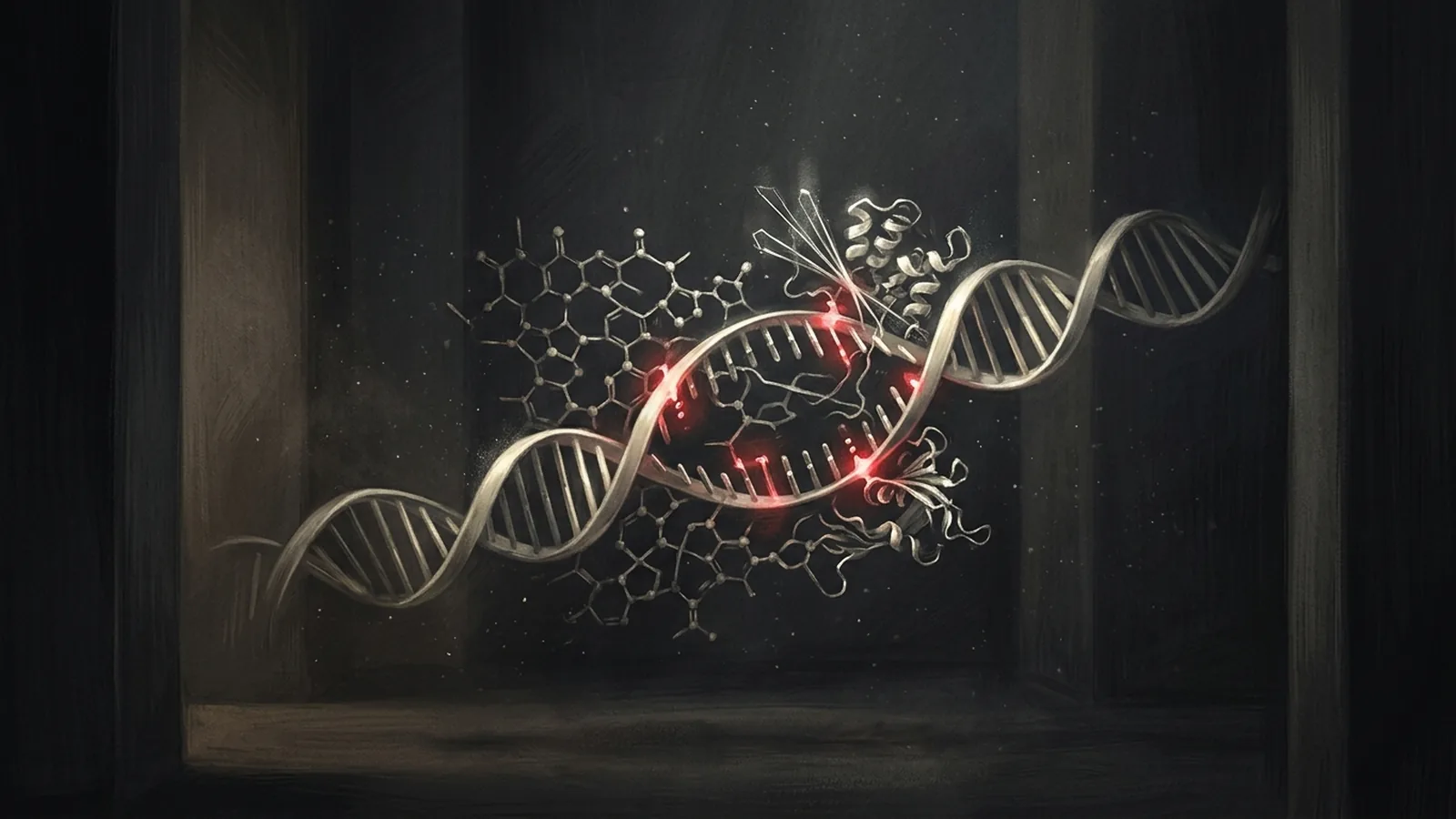
According to The Verge, Anthropic deployed nearly 950 Claude agents that processed 210 million tokens over 21 hours against a large database of DNA sequences. One agent flagged an unusual repeating pattern. Subsequent analysis and laboratory tests revealed a previously uncharacterized enzyme system in bacteriophages, viruses that infect bacteria.
Claude found the candidate and humans tested it in the lab
The company describes the scientists' role as providing the initial prompt and doing the subsequent laboratory work. It calls the data search autonomous. This is the first public result from Anthropic's new wet lab, which connects the model to physical experiments.
Anthropic compares the system with machinery behind CRISPR. It also acknowledges that it does not yet know what the discovered enzymes do. The announcement therefore establishes an unusual candidate and its physical existence, not a new gene-editing tool.
The bottleneck moves from search to biological judgment
The experiment shows a practical role for agents in exploring an enormous sequence space. They can divide the search in parallel, compare patterns and send a small set of candidates to humans. For a laboratory, the useful part is compressing a long list of possibilities into experiments worth time and material.
The result also exposes a new cost. Nearly 1,000 agents and 210 million tokens produced one candidate for human review. Value is therefore determined by the share of recommendations that survive the wet lab and lead to useful biology, not by the number of agents running.
The CRISPR comparison runs ahead of the known function
CRISPR is an analogy for enzymatic machinery here, not a measure of impact. Without a known function, independent replication and a practical application, the finding cannot support claims of a new editing system. Early disclosure demonstrates a Claude capability, but it also blends a scientific intermediate result with an Anthropic product presentation.
The word autonomous deserves the same care. The model searched the data, while people framed the task, selected the finding for review and performed the physical tests. The discovery emerged from a chain of model, scientists and an automated laboratory.
The enzyme's function will separate discovery from curiosity
The next decisive steps are concrete: characterize the biochemical function, reproduce the result outside Anthropic's lab and demonstrate an application beyond ordinary candidate search. Economics will matter too. If a similar intervention requires hundreds of agents and hundreds of millions of tokens, it must generate experiments of unusually high value.
Lilith's verdict
Anthropic brought nearly a thousand agents to the microscope, and one pointed at an interesting test tube. Until scientists learn what is actually inside it, the CRISPR sign on the laboratory door mostly serves marketing.
I keep the external link at the end. First, a concise explanation here — no hunting across someone else's site.
Original source ↗ ↗