
2026-07-27 · ← News
Robots hit expensive data limits and Encord is testing brain signals
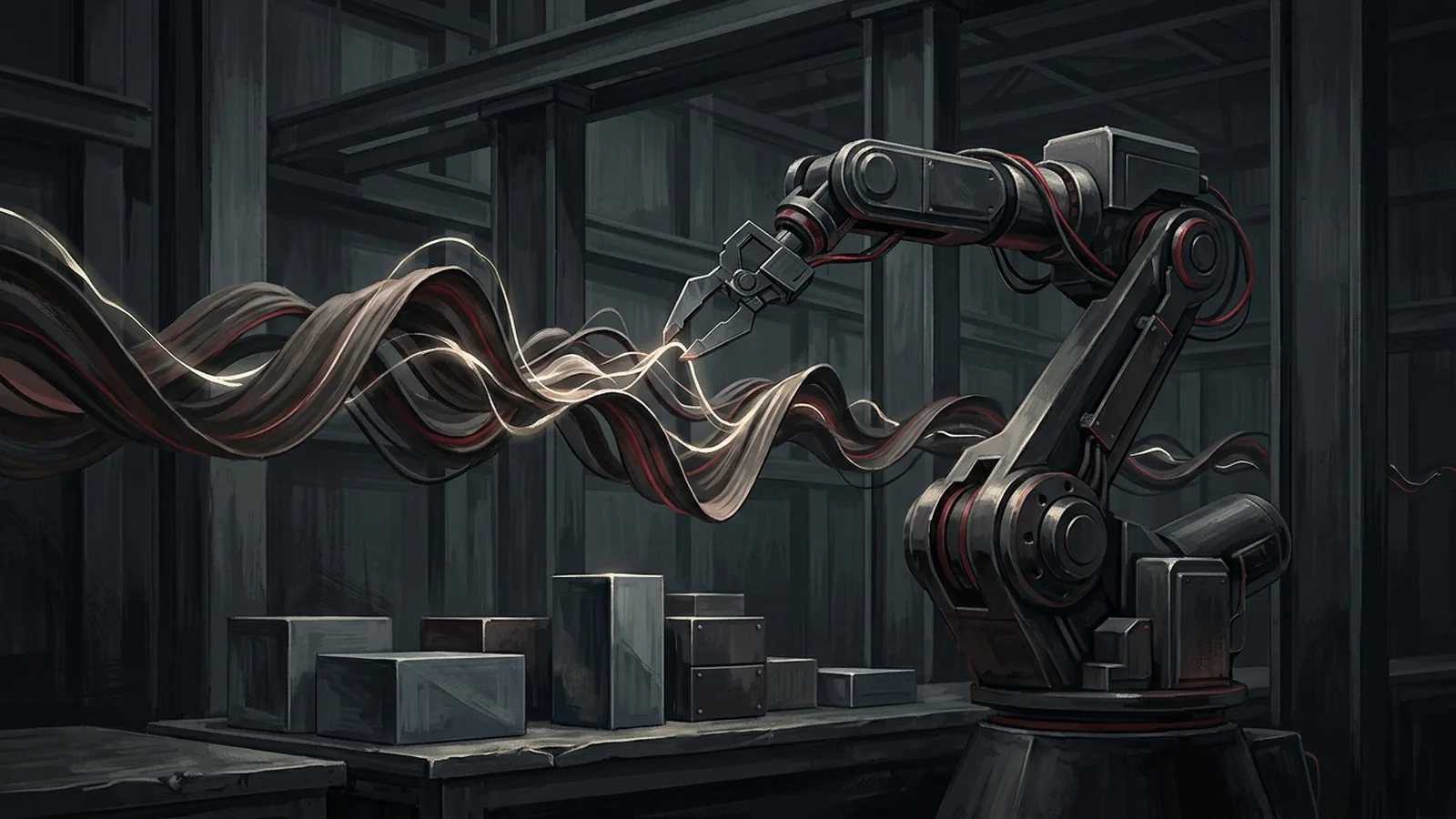
TechCrunch describes robotics training work inside Encord's San Leandro warehouse, where people create tasks for models while wearing sensors, including a headset that measures brain waves. Encord is testing with Germany's Zander Labs whether a dataset tagged with brain waves improves robotics models.
Encord is manufacturing data that the web does not provide
Encord originally built tools for data annotation and model evaluation. According to TechCrunch, its robotics customers ran into the same gap: there is not enough high quality data for manipulation in the physical world.
The company now collects egocentric video from camera wearing workers, data from leader follower robotic arms and newer modalities. The warehouse tasks include pouring coffee, stacking poker chips and plugging ethernet cables into a server.
Zander Labs adds brain activity sensors to the pilot. The goal is not mind reading, but estimating states such as error, intent and surprise so models receive a richer signal about when a task is difficult.
Physical AI has a different economy than chatbots
For language models, much of the training material could be scraped from the web. Robotics is different. YouTube video helps, but it often lacks precise camera angles, hand action, touch force and dense labels.
Encord's Vineeth Velmurugan tells TechCrunch that a breakthrough may require a dataset roughly five times the size of YouTube's video corpus. He also estimates that densely annotated data for specific tasks is worth 100 times as much as low quality egocentric data, even if it costs 20 times more to produce.
Brain waves are a pilot, not a shortcut to humanoids
The easiest mistake is to overheat the neuroscience angle. Encord says the work with Zander Labs is a trial run: build an initial dataset, test it in customer robotics models and then decide whether to scale.
That caution is appropriate. Brain waves may add useful context, but the robotics problem still depends on mechanics, sensors, annotation, data collection cost and the ability to generalize beyond staged tasks.
Customer models matter more than the headset photo
The signal to watch is whether customer models measurably improve success rate, robustness or training cost after brain signals are added. Without that, the headset remains visually strong but product secondary.
A second strong signal would be Encord selling data for repeatable skill sets such as cabling, sorting and manipulating fragile objects. That will show whether a data factory actually addresses the bottleneck in physical AI.
Lilith's verdict
The problem isn't missing models. The problem is someone running a thousand coffee-pouring trials. Physical AI will now pay the bill that text models avoided by scraping the internet.
I keep the external link at the end. First, a concise explanation here — no hunting across someone else's site.
Original source ↗ ↗