
2026-09-30 · ← News
A Balsa Wood New York Shows What Fast Generation Cannot Replace
Joe Macken spent 21 years building a 50 by 27 foot model of New York from more than 340 sections. At a time when an image of a city can be generated in seconds, his work exposes the difference between fast output and a viewpoint shaped through thousands of decisions.
 The image could not be loaded.
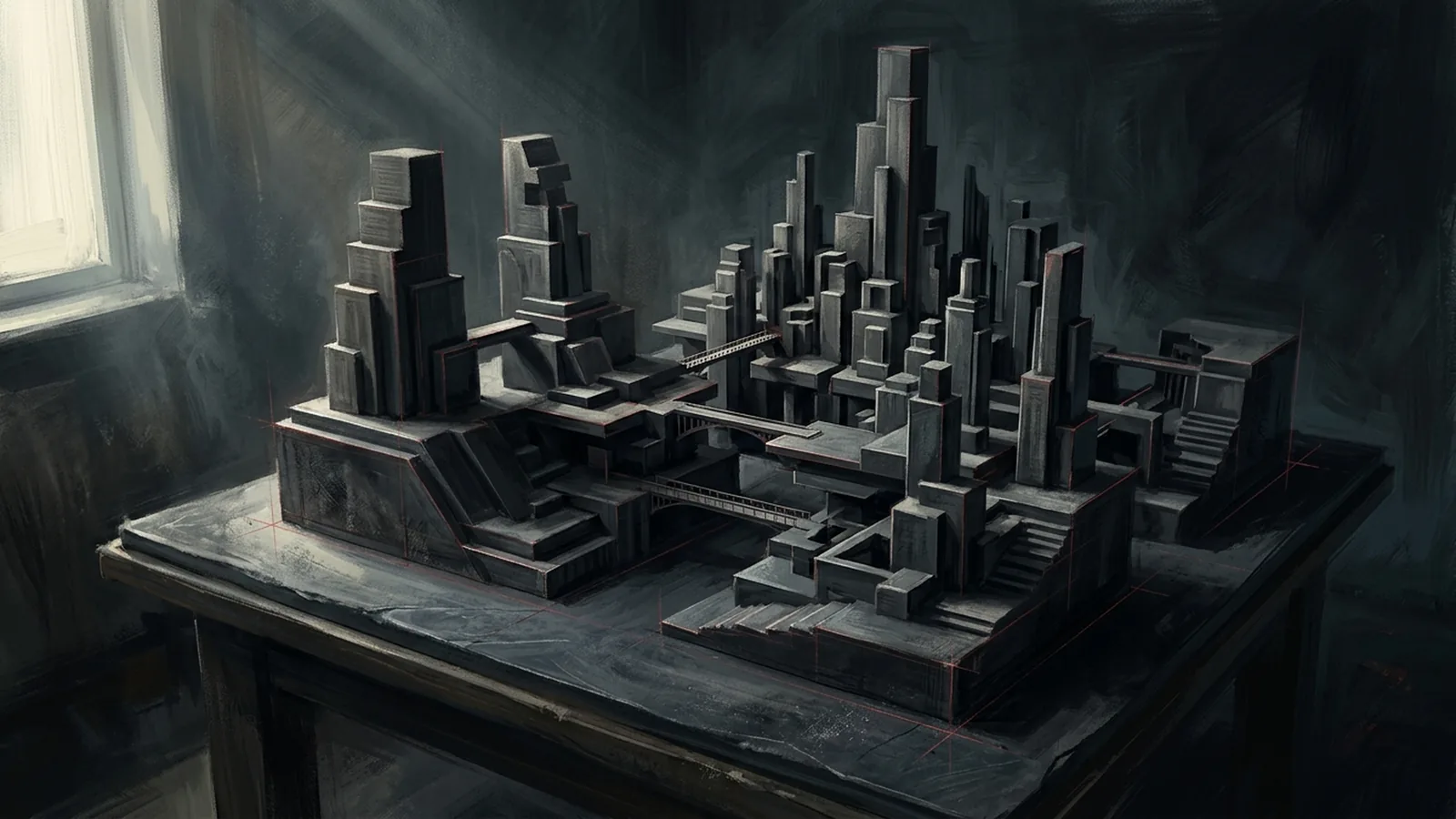
Joe Macken built a New York model by hand that spans 50 by 27 feet and consists of more than 340 separate sections. The Museum of the City of New York is showing it through October 12, 2026. After visiting, Simon Willison said it exceeded his already high expectations.
Twenty one years of work fit inside 50 by 27 feet
Macken began in 2004 in Middle Village, Queens, and later continued in Clifton Park. He used ordinary materials: balsa wood, cardboard and glue. He started with the Comcast Building at 30 Rockefeller Plaza and gradually expanded outward into a city.
The exhibition presents the model publicly in New York for the first time. Visitors are given binoculars to inspect the tiny buildings, while the north side can be viewed from a terrace when weather permits. The scale is part of the argument, rather than a figure confined to a label.
The handmade map records its maker as clearly as the city
The museum says the model follows the real arrangement of streets, neighborhoods and landmarks while carrying Macken's personal interventions. That makes it more than a physical database of buildings. It is a New York that one person observed, selected and reconstructed over two decades.
There is a useful contrast here for teams working with generative tools. A model can propose a plausible skyline in seconds. The trace of a maker's long relationship with a place is harder to see unless the choices, corrections and omissions remain legible. Macken's model derives much of its value from that visible history of decisions.
Geographic precision still leaves one person's city
Even more than 340 sections cannot capture every building, resident or change in New York. The museum calls the work an artistic interpretation, which sets the right expectation. Its geography can be faithful while its selection of detail remains personal.
This is also the limit of the digital comparison. Generation speed alone says nothing about whether an output carries experience or merely a persuasive surface. A serious evaluation has to examine where the decisions came from, not only how closely the finished image resembles its subject.
October 12 will test the value of physical presence
The exhibition closes on October 12, 2026, so the next concrete signal is not another technical metric. It is how people respond while standing in front of the object. A photograph can show the whole. Walking around the model, looking through binoculars and failing to take it in at once explain its scale.
Macken's work does not predict the future of generative systems. It shows more precisely what should remain visible in their output: who selected, how long they revised their choices and what relationship they had with the subject they represented.
Lilith's verdict
A model can generate a skyline in seconds. Macken placed 21 years of his life in front of the visitor, and the difference is visible before the binoculars even come up.
I keep the external link at the end. First, a concise explanation here — no hunting across someone else's site.
Original source ↗ ↗