
2026-10-29 · ← News
Parakeet transcribes an hour of audio on a Mac in 20 to 40 seconds. Hugging Face slipped it under Apple's own API
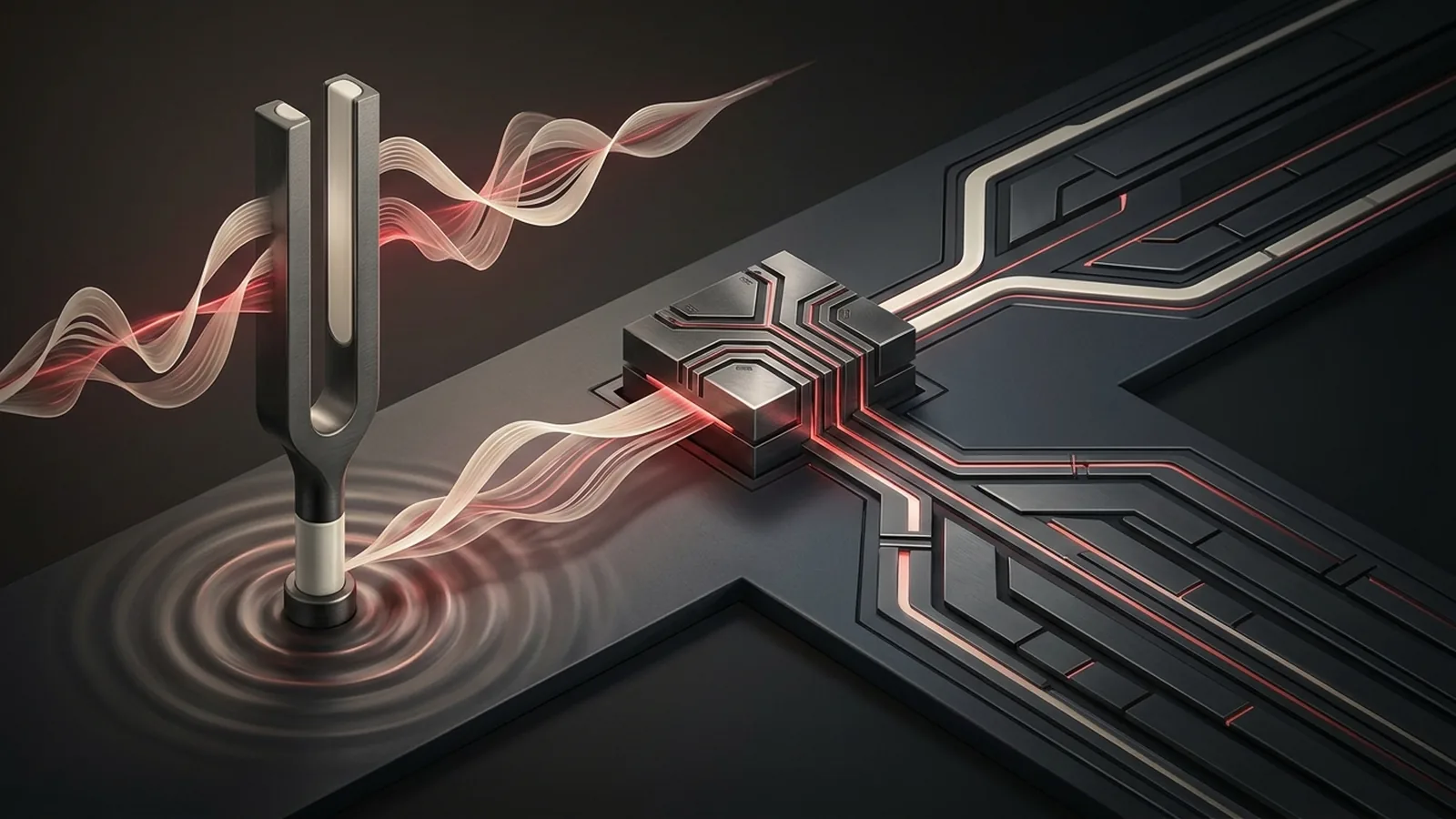
Hugging Face released two Swift packages. AnySpeechRecognizer keeps Apple's speech-to-text interface but runs Parakeet or Qwen3-ASR locally instead of Apple's engine, and adds speaker diarization. AnyDecisionModel answers yes-or-no style questions with probabilities instead of generated text.
 The image could not be loaded.
Hugging Face has released two open source Swift packages that run AI models directly on Apple devices. For app developers the headline is simple: change one import and speech recognition runs on a different model, without sending audio to the cloud.
Apple's interface stays, the model underneath can be swapped
macOS 26 and iOS 26 introduced SpeechAnalyzer, Apple's new speech-to-text API. The only engine behind it, though, is Apple's. AnySpeechRecognizer keeps the same interface. Replace import Speech with import AnySpeechRecognizer and pick another model: NVIDIA's Parakeet, Moondream's post-trained Parakeet Ultra or Alibaba's Qwen3-ASR. The authors converted all of them to Core ML.
Parakeet v3 recognizes 25 European languages, including Czech and Polish, and detects the language on its own. Qwen3-ASR, in 0.6B and 1.7B sizes, handles 30 languages and 22 Chinese dialects, such as Japanese or Cantonese. The package also adds speaker diarization through NVIDIA's Sortformer model, a feature Apple's API lacks. It tracks up to four people, even when they talk over each other.
The second package, AnyDecisionModel, tackles a different job. For a yes-or-no question, a multiple choice or a rating scale, it returns a typed result plus a probability for each answer. It reads the answer straight from the model's probabilities and generates no text. It runs locally via MLX, Core AI or llama.cpp, or through Ollama or the hosted Jev service.
Meeting transcripts and ticket triage can stay on the machine
The authors measured on a Mac Studio with an M4 Max chip. They say Parakeet transcribes an hour of audio from a file in 20 to 40 seconds and live in 1.5 to 2.5 minutes, using about 100 MB of memory. On LibriSpeech test-clean, Parakeet v3 had a word error rate of 1.55%, Apple's built-in transcriber 2.12%.
Companies that cannot send call recordings to someone else's cloud get a practical path here. A support line, meeting notes or dictation can run inside the app while the audio stays on the device. AnyDecisionModel adds the second step. Instead of parsing text from a language model, the app gets a number. That makes simple rules possible, such as sending uncertain tickets to a human.
Meetings still lose over 23% of words, and licenses differ by model
On meeting recordings from the AMI dataset, where people talk over each other, every tested model had a word error rate above 23%. The authors say themselves that they measured on one machine and a few datasets. So far they have tested only on macOS 27, not on an iPhone. AnySpeechRecognizer is at version 0.1.0, so this is an early release.
Licenses deserve attention too. Parakeet v3 and Qwen3-ASR ship under CC BY 4.0 and Apache 2.0. Parakeet Unified and Sortformer v2.1, however, fall under the NVIDIA Open Model License, so the terms need reading. For AnyDecisionModel the authors warn that raw probabilities from language models are often overconfident. The confidence value shows how concentrated the probability is on one answer. It does not tell you whether the answer is right. Calibration therefore has to be fitted on your own data.
An iPhone test and models with trained decision heads will decide it
The authors want to add more engines, including Core AI on macOS 27 and iOS 27. Only measurements on a phone will show whether local transcription fits a mobile battery and memory budget. Qwen3-ASR needs a few gigabytes of memory and downloads 0.9 to 2.4 GB.
On the decision side, models with a trained decision head are worth watching, such as Cloudflare's Clef. The Clef-Flash variant has 9B parameters and is a 6.2 GB download in 4-bit form. If such models catch on, apps will stop interrogating a chatbot. They will ask a classifier that can signal when it is unsure.
Lilith's verdict
Hugging Face left Apple the steering wheel and the dashboard, swapped only the engine and threw in a stenographer who can tell four voices apart. In a meeting where people talk over each other she still misses nearly a quarter of the words, so a human signs the minutes for now.