
2026-11-15 · ← News
Home AI Is Moving From the Smart Speaker to the Central Computer
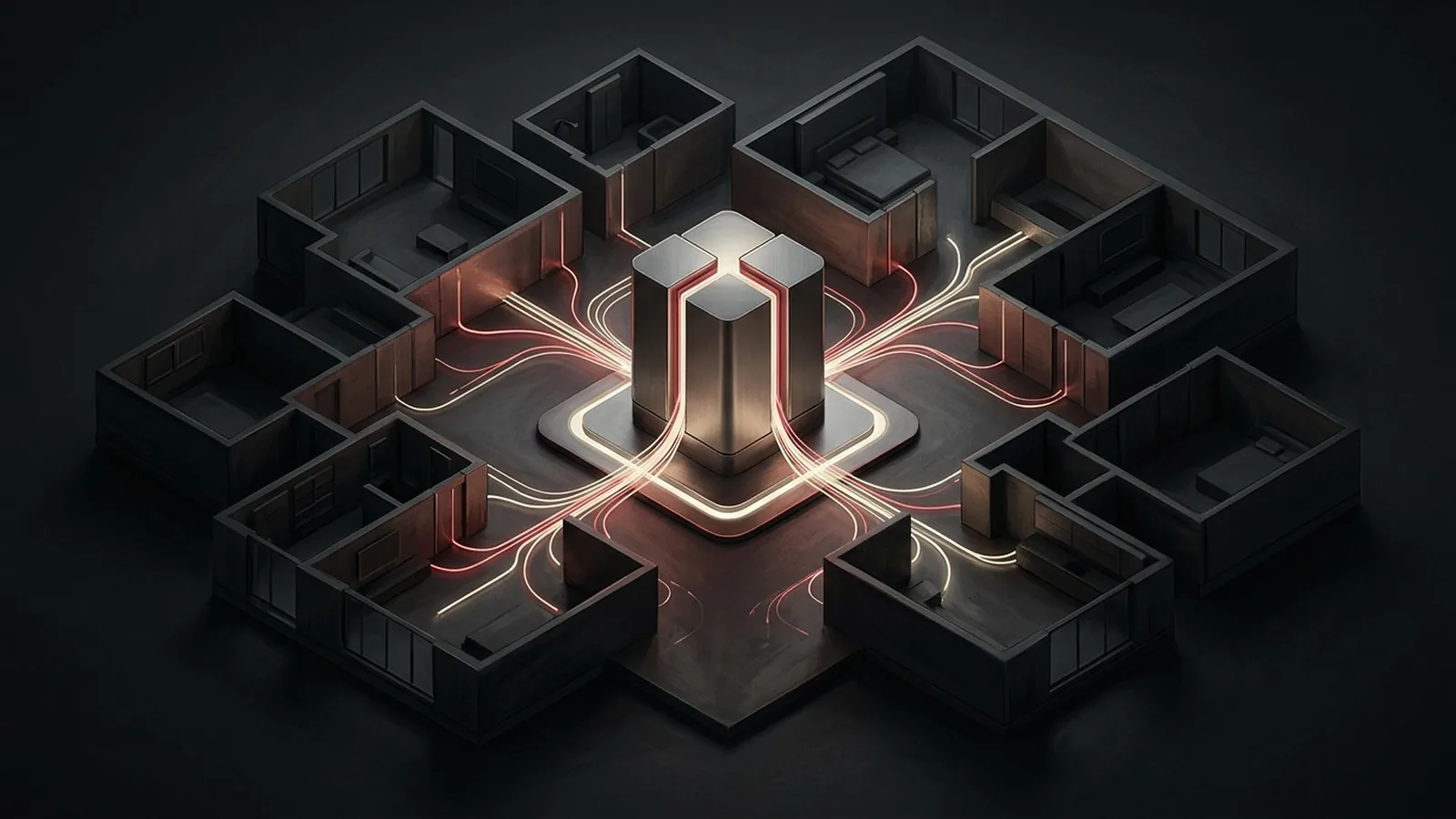
Ethan Mollick highlighted the gap between Siri or Alexa and a computer running a frontier model with agent tools. The decisive issue is whether home AI can safely connect conversation, context and real actions, not merely speak more fluently.
 The image could not be loaded.
On 15 November, Ethan Mollick described a widening gap between conventional voice assistants and a central computer running a frontier model alongside tools such as Codex, Claude Code or OpenClaw. His post is an observation from use, not a comparative test. It nevertheless identifies the emerging contest inside the home: a capable model becomes useful when it can retain context and take action.
Mollick compares a finished appliance with a computer full of agents
Mollick argues that users notice the difference when they return to Siri or Alexa after working with a central PC. Frontier models feel more intuitive to him and resemble the general household computer imagined by science fiction. The post provides no measurements of accuracy, latency or task completion.
OpenClaw illustrates one possible architecture. A single Gateway owns sessions, authentication profiles, communication channels and state, while clients connect from other devices. It can use a hosted model, install a local one or connect to an existing model server.
Value appears when the model gains tools and bounded authority
A better answer cannot turn on a light by itself. Home Assistant converts exposed scripts into tools that an LLM can call directly. An administrator selects each script separately, and the platform states a limit of 128 scripts or tools. Conversation then becomes a control layer for specific household actions.
A central computer also has an advantage over a standalone speaker: it can preserve shared context across channels and devices. It also assumes responsibility for availability, user identity, account access and the limits of what an agent may do. Model quality is only one part of the product.
A universal helper concentrates household risk in one place
OpenClaw explicitly defines one trust boundary per Gateway and does not present a shared Gateway as a hostile multi tenant boundary. Its documentation also calls out prompt injection, tool permissions, secrets and browser control risks. A local model does not automatically inherit the safety filters of hosted providers.
Local operation can reduce data exposure, but it carries a hardware cost. The smallest curated OpenClaw recipes set an 8 GiB host memory floor, and meeting it does not guarantee speed or reliability. Home Assistant offers a fully local voice path, yet its own figures show the performance gap: Whisper takes about 8 seconds per command on a Raspberry Pi 4 and under one second on an Intel NUC.
Correctly completed tasks will matter more than impressive conversation
Home AI needs tests built around ordinary work: how often it selects the right tool, whether it respects permissions for different household members and how it behaves when the model or network fails. Users also need a way to confirm, reverse and audit sensitive actions.
If a central device meets those conditions, the voice assistant can grow from a catalogue of fixed commands into an interface for the whole home. If it does not, users receive a more articulate answer and a larger surface for expensive mistakes.
Lilith's verdict
The smart speaker still waits for the right incantation. A central agent can already reach for the light switch, calendar and account, so the real question is who watches its hands.