
2026-08-27 · ← News
Hardware Gets an API: Anthropic Opens a Standard for Agentic Control
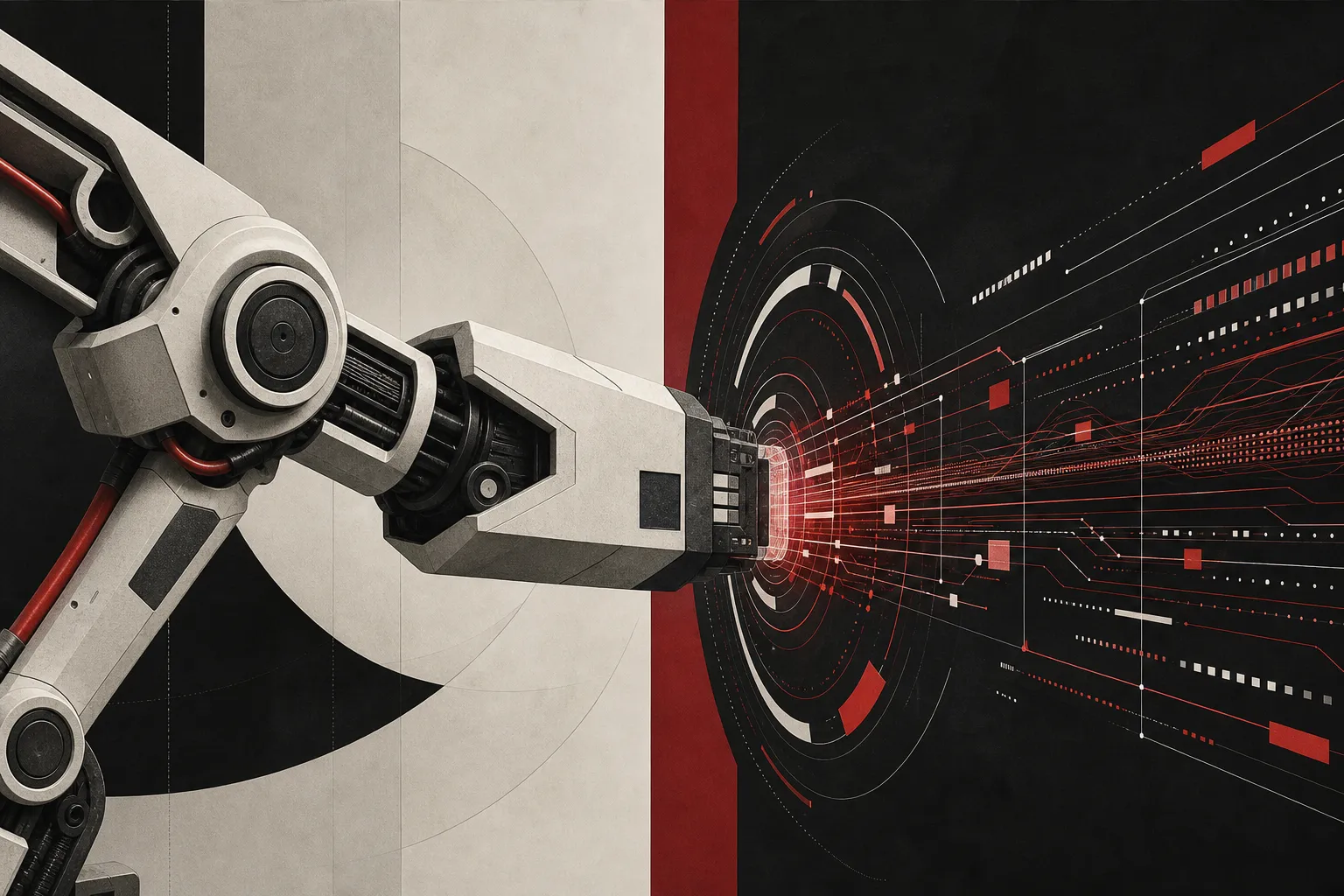
Anthropic has introduced the Model Hardware Standard (MHS). The new interface will allow AI agents to communicate directly with physical equipment, from microscopes to robotic arms, without the need to build a custom translation layer for every machine.
 The image could not be loaded.
The end of custom translators for every microscope
Anthropic, in collaboration with the HHMI Janelia Research Campus, has launched a preview of the Model Hardware Standard (MHS). It’s a shared specification that acts as a universal driver between an operating system and a physical device. If hardware has a programmable interface, MHS allows it to receive primitive commands (such as “read temperature” or “write temperature”) from an AI agent.
Until now, integrating lab or manufacturing equipment meant writing specialized software for every single instrument, taking weeks or months. MHS promises to cut this time to minutes by eliminating the need for proprietary translators. The system is model-agnostic, and agents can access it using established protocols like the recently introduced Model Context Protocol (MCP).
Automation accessibility changes for science teams
For researchers and advanced manufacturing, this opens the path to orchestrating round-the-clock experiments. An agent equipped with MHS can theoretically control multiple instruments in parallel, adjust parameters in real time based on ongoing results, and potentially resolve minor hardware errors without human intervention.
Anthropic is currently opening the standard to an initial group of labs and manufacturers to jointly build safety evaluations and best practices for systems operating physical equipment. It plans to release MHS as open source thereafter.
Where physical world orchestration hits reality
Software bugs in a browser have a different cost than a physical error on expensive lab equipment or a manufacturing line. Before MHS achieves broader adoption, it will hit a core issue: safety guarantees. Even if the standard provides a clean API for communication, the LLM agent itself remains subject to hallucinations and judgment errors. This is exactly why the current phase focuses primarily on developing safety evaluations for physical actions.
Hardware manufacturer adoption will show real impact
The specification's success depends on the ecosystem, not just the driver’s quality. The real proof of penetration won't be whether MHS works in HHMI labs, but whether major manufacturers of industrial and scientific devices start supporting the standard natively. If MHS takes hold, hardware capabilities will become, de facto, just another tool in an LLM's context window.
Lilith's verdict
We already have Model Context Protocol for software. This is the exact same trick applied to the physical world: an attempt to make factories speak LLM before they realize agents just took the keys to the engine room.
I keep the external link at the end. First, a concise explanation here — no hunting across someone else's site.
Original source ↗ ↗