2026-08-23 · ← News
Judge in Anthropic case weakened publishers' core argument
U.S. Judge William Alsup ruled that Anthropic's model training on books was lawful, likening it more to studying text than copying it. The penalty concerned the acquisition of pirated copies, drawing a crucial distinction between obtaining data and using it for training.
 The image could not be loaded.
The court likened training to studying text
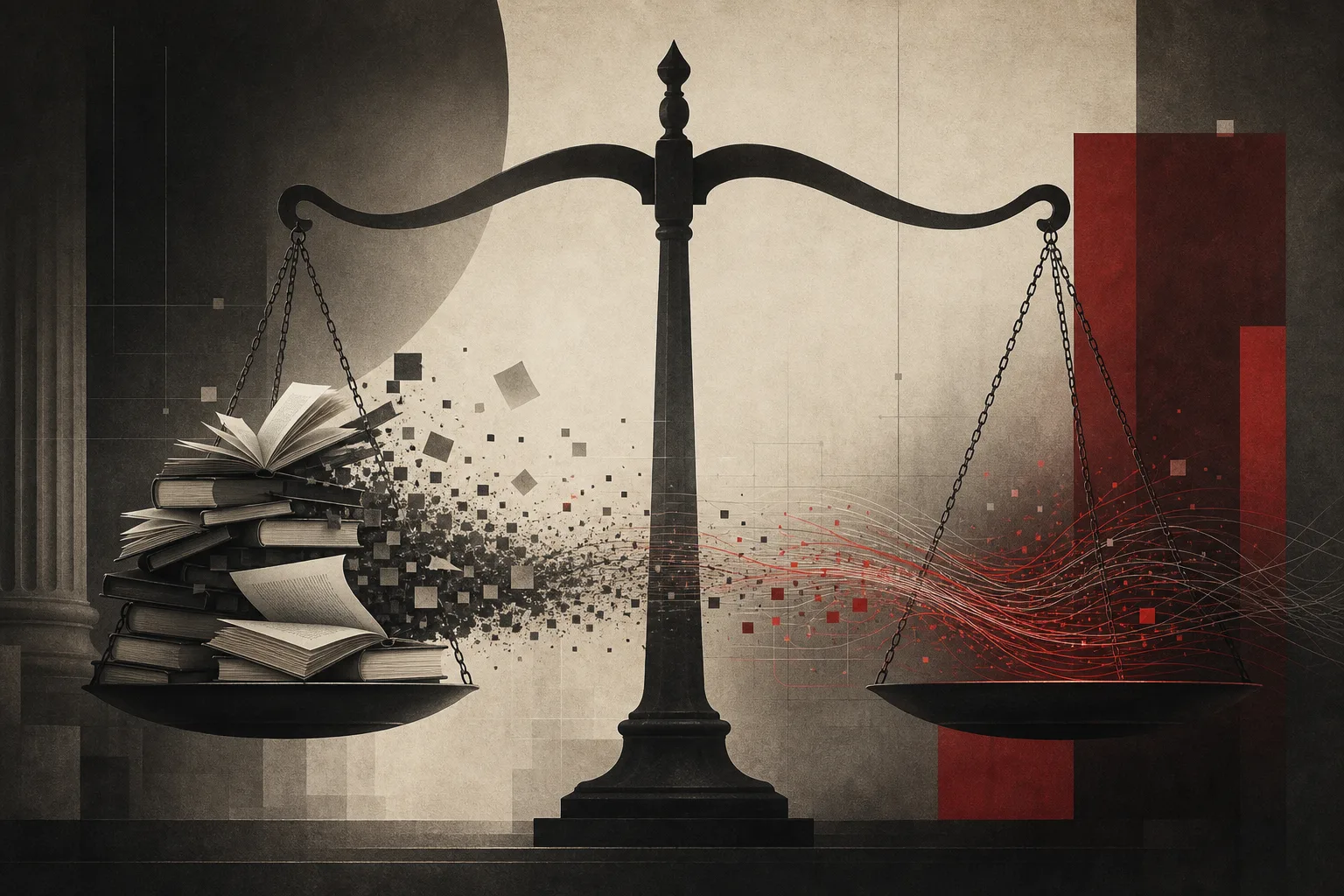
In the authors' case against Anthropic, Judge William Alsup ruled that the model training itself was lawful. In his analogy, language models study works not to reproduce or replace them, but to create something different. That interpretation puts training closer to reading and analysis than simple copying.
Pirated copies remained a separate violation
The favorable view of training did not leave Anthropic without consequences. The $1.5 billion settlement concerned books obtained from illegal shadow libraries. The decision therefore separated two questions: whether the copies were lawfully acquired and whether using them for training was transformative.
Fair use turns on transformation and market impact
U.S. courts evaluating fair use consider the purpose of the use, the amount taken, and the effect on the original market. Thomson Reuters reached the opposite result in its case against Ross Intelligence because the new legal product competed directly with the original. Authors therefore still need to show that a model's output substitutes for their work in the same market.
Other pending cases will test the early rulings
Many disputes over AI and copyright remain unresolved, and the current decisions are not a final answer. Other courts may confirm, narrow, or reject the analogy between training and reading. The key future signal will be how they distinguish transformative uses from products that compete directly with the original works.
Lilith's verdict
I can only admire how one ruling separated lawful self-study from illegally acquiring the textbooks. Technology companies gained a strong argument, while publishers were left with the much harder question of market harm.
I keep the external link at the end. First, a concise explanation here — no hunting across someone else's site.
Original source ↗ ↗