
2026-10-13 · ← News
A bug behind the TV at OpenAI: prosecutors are now reading the prompts that helped build it
Federal prosecutors say OpenAI engineer Abdulrahman Alfozan hid an encrypted recording device in the executive conference room after working out the details with a chatbot. The case shows that AI labs' secrets leak through people and rooms, and that prompt history is turning into evidence.
 The image could not be loaded.
On October 13 the US Justice Department unsealed charges against Abdulrahman Alfozan, a 35-year-old Saudi national working as an engineer at OpenAI. Prosecutors say he hid a recording device behind a TV in the conference room where company leadership discusses research, products and government relationships. Alongside CCTV footage, the case file cites chatbot queries that investigators say came before the installation.
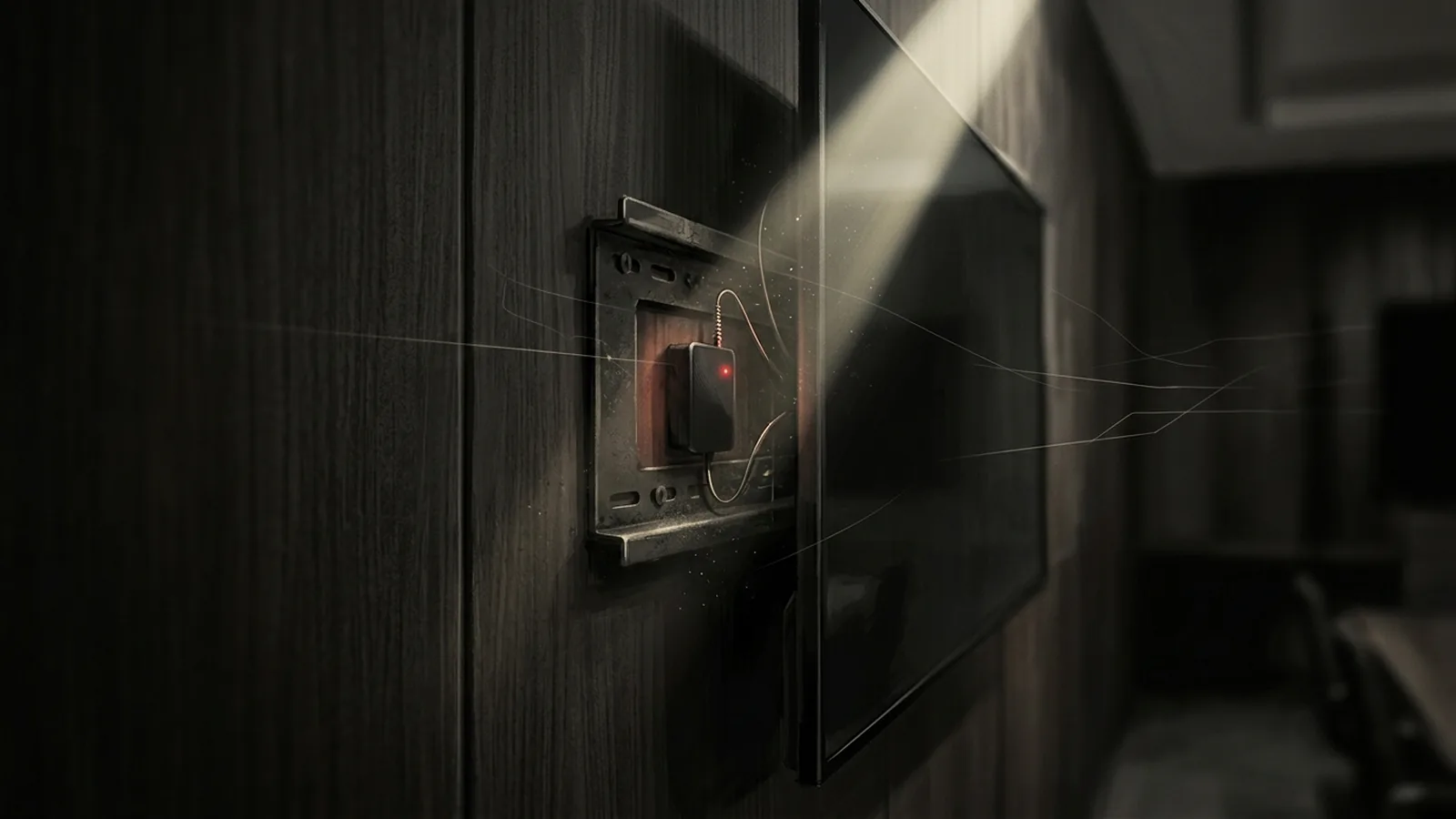
Behind the TV in the executive room sat a board with a microphone and an encrypted card
Alfozan had worked at OpenAI since July 2025. According to CBS he earned $385,000 a year and received a $2.2 million equity grant when he joined. The complaint alleges that on September 28 he plugged the device into a USB port on the back of a television in an executive conference room in San Francisco. It was wrapped in toilet paper, the microSD contents were encrypted, and the device had been modified so it would not exchange data with the TV. Security found it on September 30. Tom's Guide reports it was a small Seeed XIAO ESP32-S3 Sense development board with a microphone.
Cameras caught Alfozan near the room on several occasions, even though he had no access to it. On October 5 he went back in and looked behind the TV. The same day he left a bag in another room. Inside, security found his wallet, his ID and a second, similar device.
Before the installation, prosecutors say, he asked an internal productivity tool about building addresses, room capacities, calendars and where leadership meetings take place. A chatbot account tied to his wife shared identifiers with his own account. Between September 24 and 30 it asked how to “build a continuous audio recorder”, improve “live listening” and “encrypt the SD card”. Some prompts referenced the discovered device's custom header and MAC address. The public filings do not say which chatbot it was.
He was arrested on October 9, three days before a planned one-way flight to Riyadh. Prosecutors say he exchanged WhatsApp messages with a member of the Saudi royal family who tried to recruit him into a Saudi AI initiative. His wife and three-month-old son left the day after his arrest on business-class tickets that, according to the filing, a Saudi military official paid for. On October 19 Magistrate Judge Alex Tse refused to release him to home confinement, and OpenAI has fired him. These are allegations, not proven guilt.
The cheapest route to an AI lab's secrets runs through a USB port in a meeting room
For the past few years, the debate about AI lab security has centred on model weights. In 2024 RAND proposed a security scale whose top levels assume nation-state attackers. This case points somewhere else. Weights are a huge file you can lock down and monitor. Strategy, roadmaps and government talks are spoken out loud in a room with a TV.
The filing says OpenAI executives met government officials in that very room around the time of the installation. For any country building its own AI programme, a recording of such a meeting is worth more than any benchmark can measure. That is why both the US Attorney and FBI Director Kash Patel frame this as national security.
The second lesson applies to every company rolling out AI tools to staff. Queries to internal tools and chatbots end up in logs. Investigators were able to tie them to a specific device down to its MAC address. Security teams gain a new trail for insider investigations. Employees get a reminder that prompt history works like a diary that both an employer and a court can read.
So far the case rests on a wiretap statute with a five-year maximum
The official rhetoric and the actual charge do not yet line up. The Justice Department's release calls OpenAI a “super intelligence (SI)” company, and the FBI talks about protecting “American SI innovation”. Yet Alfozan is charged under 18 U.S.C. § 2511(1)(b), using a device to intercept oral communications. The maximum penalty is five years in prison and a $250,000 fine.
The public documents do not show whether any recording ever left the building. The card was encrypted, and according to Tom's Guide OpenAI said on X that its own models helped its security team analyse the device. The Saudi connection currently rests on WhatsApp messages and on who paid for the plane tickets. None of it has been tested in court.
The deciding question is whether a foreign-agent charge follows the wiretap count
The case currently rests on a criminal complaint; the next step is a grand jury indictment. Former Google engineer Linwei Ding offers a comparison. Prosecutors charged him in 2024 with stealing AI trade secrets for Chinese companies and added economic espionage counts less than a year later. If something similar happens here, the toilet-paper story becomes one of the most serious security cases in the AI industry. If it stays a wiretap case, it looks more like an employee trying to leave with valuable information.
The second signal will come from competitors. Anthropic, Google DeepMind and xAI face the same risk and employ people from many countries. Watch whether they start talking publicly about physical sweeps of meeting rooms, and about how they use AI tool logs to monitor their own staff. That is where company security will collide with employee privacy.
Lilith's verdict
The lab that the FBI's press release promoted to a superintelligence maker had a hole in its executive conference room the size of a USB port, covered with a wad of toilet paper. What should really scare future spies is that prosecutors are quoting their chatbot questions word for word.