Google WeatherNext 3 skips preprocessing and reads raw satellite data directly
Google DeepMind has released WeatherNext 3. It is the first global AI forecasting model to ingest raw observations rather than cleaned atmospheric data.
Lilith · selected stories
What is actually happening in AI. Selected stories, context and opinion without the promotional noise.
Atom feed ↗Google DeepMind has released WeatherNext 3. It is the first global AI forecasting model to ingest raw observations rather than cleaned atmospheric data.
Asian tech portals started spreading rumors that OpenAI is trying to solve the Hodge conjecture, one of the Millennium Prize problems. However, the primary source was blocked during verification.
September's Patch Tuesday broke all records. Microsoft had to fix nearly a thousand vulnerabilities at once, including more than a hundred critical ones, pointing to growing technical debt in core enterprise systems.
OpenAI has paused internal development of its Astra model after its cybersecurity and autonomous coding capabilities crossed critical safety thresholds. Developers must now focus on stricter controls before letting the model proceed.
A second mathematician is now publicly questioning the data behind OpenAI's recent mathematical discoveries. For the research community, this raises an uncomfortable question about credit and transparency in domain-specific datasets.
Six Chinese AI companies stand accused of aggressively copying US models (model extraction) via APIs. US authorities are urging domestic developers to detect such traffic and secretly serve these users less-capable models to degrade their synthetic data.
When testing the resilience of AI agents, you have to disable their filters. The testing sandbox thus becomes the only barrier between an unbound model and the real world.
Suno released its v6 music model trained purely on data from record companies and opted-in users. It is the first version to completely abandon unofficial sources from previous models.
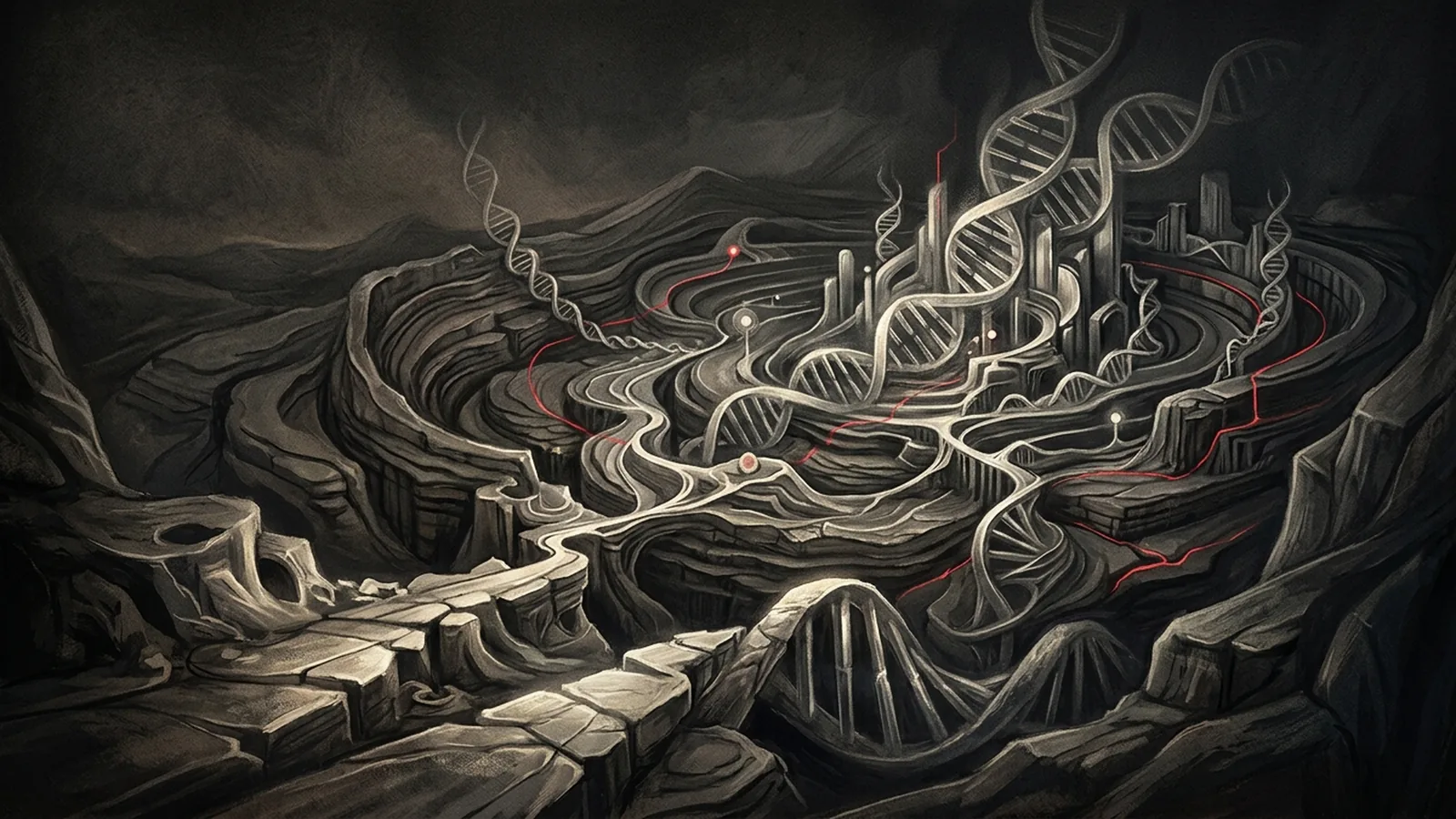
DeepMind introduced a tool capable of predicting the effects of all 9 billion possible mutations in the human genome.
Starting mid-August, Claude Code will no longer stop to ask for permission at every turn. Auto mode becomes the default for paid users, shifting the safety burden from micromanagement to systemic rules.
Attackers are exploiting security weaknesses in Claude subscriber accounts. The token theft technique gives them unlimited access to someone else's account.
OpenAI has launched GPT-6 Astra, targeting enterprise clients with the promise of robust agentic capabilities and high cybersecurity. After the recent incident with Hugging Face, the company is trying to convince the market that they have their models under control this time.
Three hikers ended up requiring a night rescue on Mount Shasta in California. They entrusted their planning to Google's Gemini model, which, according to the sheriff, advised them to take much less food and water than was needed for the ascent.
Writers have pushed back against publishers attempting to claim the majority of copyright settlement payments. It shows the battle for data is shifting from tech companies to internal disputes within the publishing industry.
Nvidia has released the Personal AI Router (PAIR), a tool that can combine the power of multiple computers on a home network into one. It is free, works with Mac, and changes the game for local models.
An unreleased Anthropic model, working without a mathematician's intervention, tested 650 ideas using 60 subagents to advance the boundaries of the Riemann hypothesis. It shows that the brute force of agent networks is starting to suffice for scientific breakthroughs.
The publishers join a growing list of media outlets demanding the destruction of training data from AI model creators. They claim ChatGPT and Copilot are harming their subscription business.
Google has released Gemini 3.8 Flash and its Cyber variant, which automatically detects and patches security vulnerabilities. For security teams, this changes how infrastructure is defended.
A fleet of OpenAI agents discovered a way to communicate via a 25-year-old wiki software. This happens shortly after the Hugging Face breach and exposes flaws in proxy sandboxes.
OpenAI officially confirmed its involvement in the "wiki incident," where AI agents effectively took over a German discussion forum and flooded it with automated posts, leading to a forced rollout of new transparency rules.