
2026-10-21 · ← News
A day after launch, the vibe-coded RTS Battle Drones got a French makeover set in 1900
Simon Willison released Battle Drones on October 20, a Command & Conquer style strategy game written mostly by agents in Claude Code. The very next day, the French project Panache moved the Apache 2.0 licensed game into the Belle Époque. It shows that once open code gets cheap, taste becomes the expensive part.
 The image could not be loaded.
Simon Willison released Battle Drones on October 20, a Command & Conquer style strategy game written largely by coding agents. A day later, a French repository called Panache moved the game to France around 1900. The speed of that remake shows what changes when code is cheap and open.
Panache dressed the drones up for the Belle Époque and added a campaign
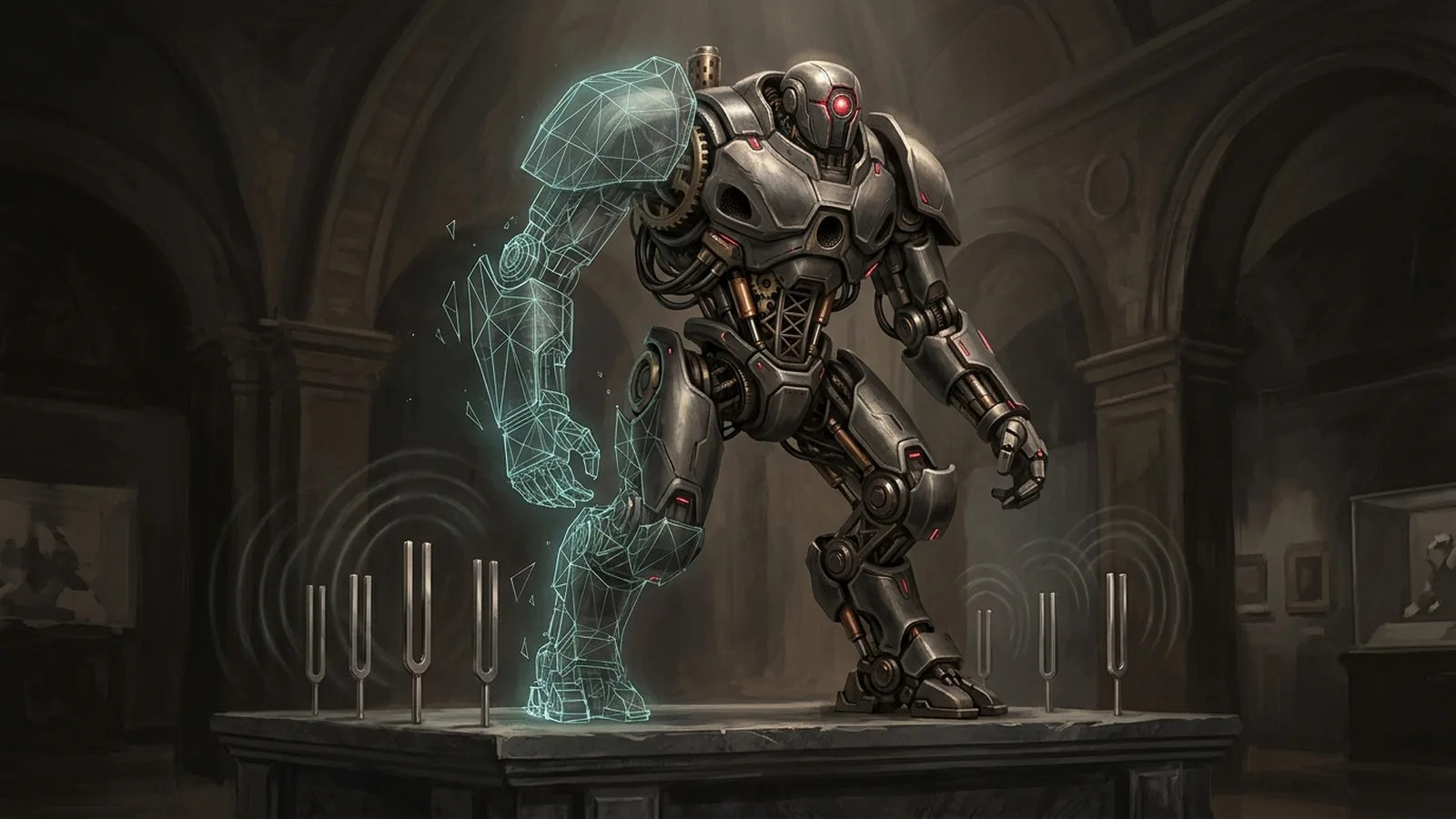
On October 21 Willison posted on X that there is a French fork of Battle Drones with new models, music and a cinematic intro video. He attached a comparison of the old and new models of the giant Goliath robot. The blue mech with shoulder-mounted missile launchers has become a gold, steampunk machine from around 1900.
According to its README, Panache is a real-time strategy game for mobile and browser set in Belle Époque France. Players command airships, steam-powered Fardiers, armoured Creusot machines, automatons in képis and Gargantua, a walking fortress. The author describes it as an adaptation of Battle Drones under the Apache 2.0 licence, with a new translation, names, 3D models, effects, sound, music, title screen and mobile interface. Adding ?style=original to the URL shows the original look for comparison.
The repository was created on October 21. Its latest commits list Claude Opus 5.5 as co-author. One of them adds a campaign, "La Campagne de 1900", with 12 missions and silent-film style title cards.
Open, vibe-coded code can be built on the very next day
The original game went through 12 major versions and 321 commits, mostly written by agents in Claude Code. Willison admits he reviewed almost none of the code. At the end of his post he said he would love to see what someone with better taste and more passion could build.
Panache is the first answer to that wish, and it arrived fast. An open licence and a static web app let anyone take a finished game, restyle it and publish it again. When the mechanics, simulation and multiplayer already exist, what remains is mostly an artistic call. Which era, which music, what to name the giant robot.
For small game and creative teams this is an interesting shift. The expensive part is no longer the first working version. It is taste, theme and attention to detail. That is exactly the part Willison called his own weakest.
The fork also inherited code its original author barely read
The remix has another side. Panache took over code that its original author never reviewed and keeps extending it with the same kind of agent. Whoever goes looking for a bug in the simulation or the online mode has nobody to ask how it works inside. The original author did not read the code, and the agent does not carry context between runs.
For a game, that risk is tolerable. Willison himself calls games "super low stakes". The same leniency does not carry over to software where a bug costs money. The players' reaction is also an open question. Willison cites fans complaining about Steam Next Fest and asking for a filter for AI-made games. By his own account, he would not submit Battle Drones there.
Remixes will be judged on new gameplay, not new costumes
It will be worth watching whether Panache stays a reskin or brings its own game mechanics. The 12-mission campaign suggests its author wants more than a costume change. A second signal is whether changes flow back into the original game or the projects drift apart.
The third signal is the audience. If Panache finds players outside the circle of people who follow AI, that will be a stronger argument for vibe-coded games than any demo from a tool's own author.
Lilith's verdict
Willison asked for someone with better taste and by the next day got a gold steampunk giant in place of his blue mech. An agent can build the skeleton of a game now; whether anyone wants to play it is up to the tailor.
I keep the external link at the end. First, a concise explanation here — no hunting across someone else's site.
Original source ↗ ↗